












📅 September 21, 2026
📚 BELIEVE HIS PROPHETS
📖 Bible Reading: 🎵 Psalm 31
🤲 Into Your Hands I Commit My Spirit
✨ Secure in God’s hand when fear, loneliness, and distress become overwhelming
🌐 Read online here
🌅 Introduction
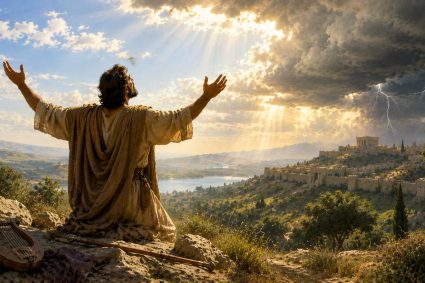
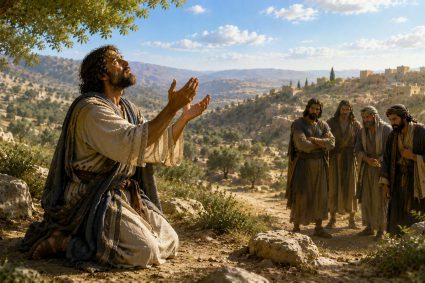
Psalm 31 takes us deep into the heart of a person who experiences distress and trust at the same time. David speaks of fear, enemies, slander, loneliness, and physical exhaustion. People turn away from him, and at times he feels like a forgotten vessel that no one needs anymore. Yet throughout this experience, a strong confession runs through the psalm: his life is in God’s hand. David does not merely ask for deliverance; he entrusts himself to the Lord: “Into Your hands I commit my spirit.” Centuries later, Jesus speaks these words on the cross. This gives Psalm 31 a special depth: it shows that trust is not the absence of suffering, but the deliberate surrender of oneself to God precisely when, from a human perspective, almost no security remains.
⋯⋯⋯⋯⋯⋯⋯⋯⋯⋯◆⋯⋯⋯⋯⋯⋯⋯⋯⋯⋯
🔍 Commentary
David begins with a confession: “LORD, in You I put my trust.” Even before he describes the extent of his distress, he names the place of his refuge. His hope does not lie in his ability to control the situation himself, but in the faithfulness of God.
He asks not to be put to shame and to be delivered through God’s righteousness. God’s righteousness does not appear here as a threat to David, but as the basis of his hope. Because God is righteous and faithful, David can trust that injustice will not have the final word.
Then the images of security multiply: God is to be his rock, his fortress, and his refuge. David apparently knows of no secure human place to which he can flee. Therefore, he makes God Himself his place of refuge.
The connection between protection and guidance is striking: “For You are my rock and my fortress; therefore, for Your name’s sake, lead me and guide me.” David does not merely want to escape the immediate danger. He needs someone who will show him the way forward.
His enemies have secretly set a net for him. The image comes from hunting and describes a danger that is not openly visible. David does not always know where the next trap lies. But he trusts that God sees what is hidden from his own eyes.
Then the first part of the psalm reaches one of its deepest statements: “Into Your hands I commit my spirit; You have redeemed me, O LORD, God of truth.” David does not place merely one particular problem into God’s hands. He entrusts his whole life to Him.
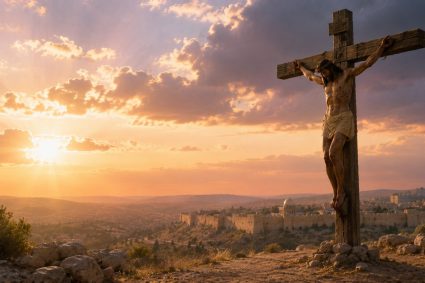
These words receive a special meaning in the New Testament. Jesus speaks them on the cross immediately before His death. In the midst of extreme humiliation and physical suffering, He entrusts Himself to the Father. In this way, the sentence from Psalm 31 becomes one of the strongest biblical prayers of surrender.
Jesus does not speak these words from a comfortable situation. Precisely for that reason, they reveal what trust means in its deepest form: entrusting oneself to God when outward circumstances offer no security at all.
David then distinguishes his trust from confidence in worthless idols. He does not want to place his security in things that cannot truly save. His trust belongs to the Lord.
For this reason, he can rejoice in God’s goodness even though his distress is still part of his experience. God has seen his affliction and known the anguish of his soul. This statement is crucial: before David speaks of a complete change in his circumstances, he already knows that God has seen him.
God has not delivered him into the hand of the enemy, but has set his feet “in a spacious place.” As in Psalm 18, spaciousness stands in contrast to oppressive confinement. God’s deliverance gives room to live.
Yet David now returns once again to lament. Psalm 31 does not move in a straight line from sorrow to joy. Trust and pain alternate. It is precisely this that makes the psalm so true to life.
David prays: “Have mercy on me, O LORD, for I am in distress.” His eyes, his soul, and his body are marked by grief. Suffering affects the whole person. Spiritual distress can exhaust physical strength, and physical suffering can in turn burden the soul.
He describes his life as filled with sorrow and sighing. His strength has faded. David does not try to minimize his situation with pious expressions. He openly brings the reality of his pain before God.
The social isolation weighs especially heavily. Enemies despise him, neighbors are afraid of him, and acquaintances avoid him. People who see him in the street flee from him. Added to his inner distress is the feeling of being abandoned by others.
Then David says: “I am forgotten in their heart like a dead man; I am like a broken vessel.” A broken vessel had lost its usefulness and could be thrown away. David uses this image to describe the painful feeling that he has become insignificant to others.
Many speak against him, terror surrounds him, and enemies conspire over how they can harm him. The threat is not imaginary. Yet in the middle of this darkness, the decisive confession appears again: “But as for me, I trust in You, O LORD; I say, ‘You are my God.’”
This “But as for me” marks the turning point. David cannot control what others say, plan, or do. But he can decide whom he will trust. His circumstances do not completely determine his relationship with God.
Then follows another key statement: “My times are in Your hand.” David’s future is not ultimately in the hands of his enemies. His life belongs to God.
This truth brings a deep form of freedom. We know neither the length of our lives nor all the developments that lie ahead. Much is beyond our control. Yet the believer may know: My time is not in the hands of blind chance, but in God’s hands.
David asks that God’s face may shine upon him. The image recalls the priestly blessing. In the midst of darkness, David seeks not merely a change of circumstances, but the gracious presence of God.
After this, he again asks for righteous intervention against those who deliberately do evil and hurt others with pride and contempt. As in other psalms, David leaves final judgment in God’s hands.
Now praise breaks forth again: “Oh, how great is Your goodness, which You have laid up for those who fear You.” After all the descriptions of his distress, David deliberately turns his gaze toward the greatness of God’s goodness.
God hides His people in the shelter of His presence from human schemes and keeps them safe from the strife of tongues. For David, who suffers under slander, this image is especially precious. Not every false word can be silenced immediately, but no false human judgment can replace God’s judgment over a person.
David praises the Lord because He has shown him His marvelous goodness. At the same time, he remembers a moment of his own panic: “I said in my haste, ‘I am cut off from before Your eyes.’” In his fear, David had believed that God had abandoned him.
Yet looking back, he realizes that this feeling did not correspond to reality. God had heard the voice of his supplication. Psalm 31 thus makes a very careful distinction between what a person feels in fear and what is actually true before God.
The psalm no longer ends with David alone. It addresses all believers: “Love the LORD, all you His saints!” His personal experience becomes a testimony for the community.
Finally, he calls out to them: “Be of good courage, and He shall strengthen your heart, all you who hope in the LORD!” The man who had previously described his own fear, loneliness, and abandonment can now encourage others. Not because his suffering was unreal, but because in the midst of it he experienced God’s faithfulness.
From a Christian perspective, Jesus’ use of this psalm stands especially at the center. On the cross, Christ takes David’s words upon His lips: “Into Your hands I commit my spirit.” He entrusts Himself to the Father even unto death. But the story does not end in the grave. The resurrection confirms that this trust was not in vain.
Psalm 31 therefore receives a hope that reaches beyond every present crisis. Whoever entrusts his life to God does not receive a guarantee that every painful path will be avoided. But he may know that even the final enemy, death, is not stronger than God’s hand.
Psalm 31 therefore invites us to deep surrender: our worries may rest in God’s hand, our future may rest in God’s hand, and ultimately our whole life may rest in God’s hand. There we are not beyond every distress, but we are never beyond His faithfulness.
⋯⋯⋯⋯⋯⋯⋯⋯⋯⋯◆⋯⋯⋯⋯⋯⋯⋯⋯⋯⋯
📌 Summary
Psalm 31 describes David in great outward and inward distress. Enemies pursue him, people avoid him, slander surrounds him, and his strength is fading. Yet he holds fast to God as his rock and fortress. Two confessions especially carry the psalm: “Into Your hands I commit my spirit” and “My times are in Your hand.” David learns to entrust his whole life to God. Even when he feels abandoned, he later recognizes that the Lord has heard his prayer. Therefore, his personal lament ends with a call to all believers to wait courageously for the Lord.
⋯⋯⋯⋯⋯⋯⋯⋯⋯⋯◆⋯⋯⋯⋯⋯⋯⋯⋯⋯⋯
💡 Message for Us Today
There are situations in which we can control neither the reactions of other people nor the development of our circumstances. Psalm 31 does not lead us into an illusion of control, but into a deeper security: our life lies in God’s hand. We may entrust to Him our future, our fears, our reputation, and even those areas that we can no longer influence. Jesus Himself prayed these words on the cross and thereby showed how far trust can reach. Whoever surrenders to God does not always know along which path he will be led, but he knows in whose hands that path lies.
⋯⋯⋯⋯⋯⋯⋯⋯⋯⋯◆⋯⋯⋯⋯⋯⋯⋯⋯⋯⋯
💭 Thought for Reflection
What area of my future am I still trying desperately to hold on to myself—and can I consciously pray today with David and Jesus: “Into Your hands I commit my life; my times are in Your hand”?
⋯⋯⋯⋯⋯⋯⋯⋯⋯⋯◆⋯⋯⋯⋯⋯⋯⋯⋯⋯⋯
🙏 Closing Prayer
Lord, my God, You are my rock and my secure refuge. You know the things that frighten me, the words that wound me, the uncertainties of my future, and even the thoughts that I cannot tell another person. Thank You that none of this is hidden from You and that I may come to You with everything.
Today I want to place my life anew into Your hands. My times are in Your hand. Keep me from being ruled by fear, by human judgments, or by anxiety about tomorrow. Where I see no way out, guide me. Where my strength fails, carry me. Where I feel forgotten or alone, remind me that Your eyes never turn away from me.
Thank You for Jesus Christ, who even in the darkest hour entrusted His life into Your hands. Teach me also to trust You not only when I understand Your ways, but especially when I still see no answer. Strengthen my heart, make me courageous and steadfast, and help me wait for Your goodness.
In Jesus’ name. Amen.
